Product Description
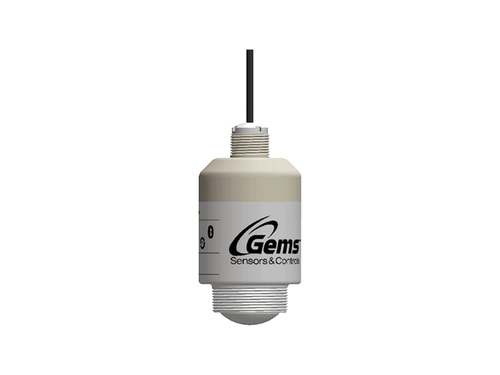
The RLI-80 Non-Contact Radar Level Sensor is a no-moving parts continuous level transmitter for reliable performance in challenging OEM and industrial tank level applications. RLI-80 Non-Contact Radar comes standard with 4-20 mA, Modbus, & Bluetooth connectivity for configuration and setup. The RLI-80 provides accurate level measurement in medias with a dielectric constant of 2 or greater. Constructed of chemically inert PVDF material and designed to withstand IP67 conditions, RLI-80 Non-Contact Radar Sensor withstands the harshest conditions. The 2" NPT mounting provides adaptability to be used in tanks as large as 49 ft (15m), and as small as 1 ft (0.3m). RLI-80 is unaffected by changes in physical properties of the application such as pressure, temperature, or vapors.
Advanced Non-Contact Measurement TechnologyUtilizing high-frequency radar (microwave) technology, this sensor provides continuous, non-contact level measurement for both liquids and bulk solids. Its beam angle of 8 allows for pinpoint accuracy, even in challenging environments. The system operates reliably across a wide measurement range of 0.3 m to 30 m, making it suitable for a variety of storage tanks and silo applications.
Designed for Industrial Durability and SafetyWith an enclosure made of stainless steel and UV-resistant polymer, the radar level sensor offers enduring performance in harsh industrial conditions. It features explosion-proof options (upon request) and houses an IP67-rated shell, ensuring protection against water and dust ingress. Operating effectively in temperatures from -40C to +80C and humidity from 0-100% RH, its built to last.
Flexible Integration and Easy MaintenanceThe device comes with various process connections, including G1, G2 threads, and custom flanges for simple installation. Supporting power-efficient operation (<2.5 W) and low startup time (<10 s), it delivers rapid response with less downtime. The sensor is virtually maintenance-free and integrates seamlessly with existing analog and digital control systems, featuring optional wireless and integrated LCD display.
FAQs of Non Contact Radar Level Sensor:
Q: How does the non-contact radar level sensor measure levels in tanks and silos?
A: The sensor uses microwave radar waves in the 2426 GHz frequency range to emit signals toward the mediums surface. The time it takes for the reflected wave to return allows the sensor to calculate the distance and thus the material level, all without making physical contact with the measured substance.
Q: What types of applications are suitable for this radar level sensor?
A: It is ideal for continuous level measurement in liquid and solid storage tanks, silos, and other industrial containers. The high sensitivity and optimized performance for low dielectric constants make it effective for a wide variety of industrial materials and processes.
Q: When should I opt for explosion-proof and wireless options?
A: Explosion-proof housing should be selected when operating in hazardous locations where flammable gases or vapors may be present. Wireless options are beneficial in situations where cable routing is difficult or costly, adding flexibility to sensor deployment and data collection.
Q: Where can this radar sensor be installed, and what are the mounting options?
A: The sensor supports threaded (G1, G2) and flanged mounts, making it adaptable to most tank or silo layouts. Custom flange interfaces are also available, so it can be integrated into existing or new installations with ease.
Q: What is the process for integrating the radar level sensor with industrial control systems?
A: The device offers multiple output interfaces, including 4-20 mA analog, HART, RS485, and Modbus digital communication. This ensures straightforward integration into SCADA, PLCs, or other process control systems. Wireless connectivity is also an option if needed.
Q: How is maintenance minimized for this level sensor?
A: The sensors non-contact technology eliminates mechanical wear, while its corrosion-resistant materials and self-diagnosis capability reduce the need for routine maintenance. Its design enables reliable, long-term, and maintenance-free operation in harsh environments.
Q: What benefits does the integrated LCD display provide?
A: The optional integrated LCD display allows users to quickly view and configure measurement parameters on-site. This feature enhances usability, supports immediate status checks, and simplifies on-site calibration and troubleshooting.



 Send Inquiry







 Send Inquiry


 Send Inquiry
 Send SMS


